Rekeying vs. Replacing Locks: Which Is Right for Your Denver Home?
Whether you have just moved into a new house or lost a set of keys, the question comes up fast: should you rekey your locks or replace them entirely? Here is how to decide.
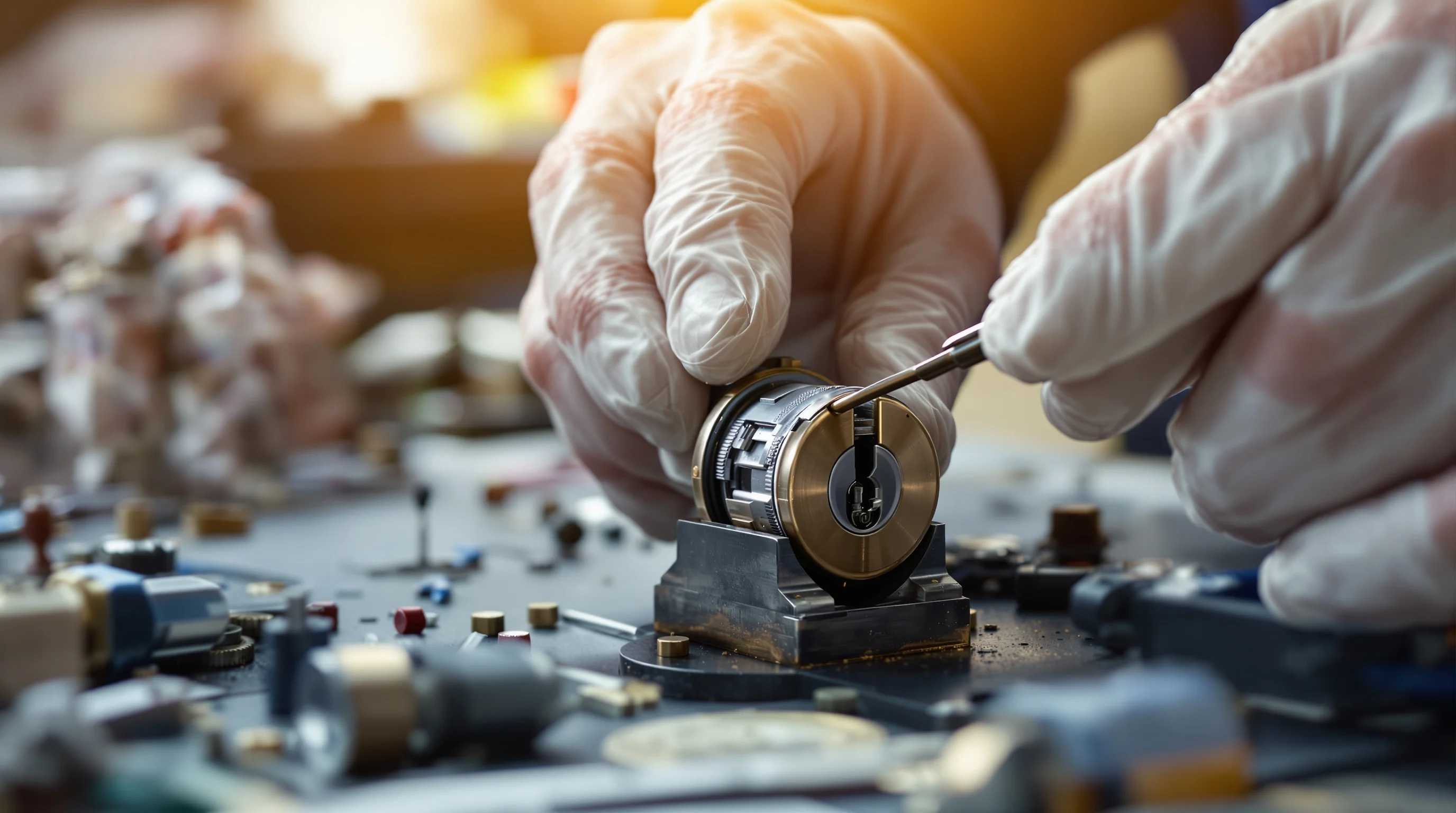
What Is Lock Rekeying?
Lock rekeying is the process of opening a lock cylinder and swapping out the internal pins and springs so that the old key no longer operates it. The lock hardware itself — the knob, the deadbolt housing, the trim — stays exactly where it is. Only the "guts" inside the cylinder change. The result is a lock that looks identical from the outside but requires a completely new key to operate.
This is the service we recommend most often to new homeowners in Denver. When you close on a house, you simply do not know how many copies of the existing keys are out there. The previous owners, their family members, the cleaning crew, the dog walker, contractors who worked on the place during the listing period — any of them could still have a key. Rekeying costs less than replacing every lock and gives you the same result: old keys stop working.
When Rekeying Makes Sense
- You just moved into a new home. This is the single most common reason for rekeying. Your residential locksmith can rekey every exterior lock on the property in about an hour.
- You lost a set of keys. If you know approximately where the keys were lost (or they were stolen), rekeying eliminates the risk immediately.
- You want multiple locks to work on one key. Rekeying can "key alike" multiple locks so your front door, back door, and side door all use the same key.
- A roommate or tenant moved out. Even if they returned their key, you cannot guarantee they did not make a copy. Rekeying removes that uncertainty.
- The existing hardware is still in good condition. If your locks operate smoothly, look fine, and provide the level of security you need, rekeying preserves that investment.
When Lock Replacement Is the Better Choice
Rekeying is not always the right answer. Here are the situations where we recommend replacing the lock instead:
- The lock is worn out or damaged. If your deadbolt sticks, the key wobbles in the cylinder, or the latch does not extend fully, the lock has mechanical problems that rekeying will not fix. At that point, you are better off replacing the entire unit. Our lock installation and repair team handles these jobs regularly.
- You want to upgrade security. Replacing a standard deadbolt with a Grade 1 high-security deadbolt gives you a stronger lock with drill-resistant and pick-resistant features. Rekeying cannot upgrade the physical strength of the lock — it only changes the key that operates it.
- You are switching to smart locks. If you want a Wi-Fi-connected lock you can control from your phone, you are replacing the hardware, not rekeying it. See our smart lock and security systems page for options.
- The lock is an obsolete model. Some older locks (especially certain rim cylinders and mortise locks) use uncommon keyways for which blanks are hard to source. In those cases, replacing the lock with a modern equivalent is often more practical.
- You are matching finishes or styles. If you are renovating and switching all your door hardware from brass to matte black, it usually makes more sense to buy new locks in the desired finish than to rekey old mismatched hardware.
What About the Cost Difference?
Rekeying typically costs less than lock replacement because the technician is only changing the internal pin configuration, not the entire lock body. The labor time is similar — about 15 to 20 minutes per lock — but the parts cost for rekeying is negligible (a few pins and springs versus a complete lock assembly). If you have six exterior doors, rekeying all six to a single key is almost always going to be the more budget-friendly option compared to buying and installing six new deadbolts.
That said, do not let cost be the only factor. A rekeyed lock that is already worn out is still a worn-out lock. If the deadbolt is ten years old and feels loose, spending a little more to replace it with a modern Grade 1 deadbolt is money well spent for the long-term security of your home.
What We Typically Recommend for Denver Homeowners
When we walk a Denver home — especially in older neighborhoods like Capitol Hill, Washington Park, or Baker where houses date back to the early 1900s — we often find a mix of lock conditions. Some are original mortise locks that have been well cared for and just need rekeying. Others are cheap builder-grade deadbolts that were installed during a 1990s remodel and should be replaced. Our advice is always specific to what we see on your doors.
In general, our recommendation is to rekey any lock that is in good working condition and replace any lock that is worn, loose, or below the security level you want. There is no one-size-fits-all answer, but a qualified locksmith can assess your hardware and give you an honest recommendation in about ten minutes of looking at your doors.
For most Denver homeowners, a combination approach works best: rekey the locks that are solid, replace the ones that are not. That delivers the best balance of security and cost.
Need your locks rekeyed or replaced?
Our Denver locksmith team can assess your current hardware and recommend the right approach for your home. Call us for a quote or to schedule service.
Call (720) 706-5092